How Nordic studios are using AI, from legal risk to AI-native production

- Not every studio expects AI to reshape its focus - some keep human creativity deliberately central. Some studios are restructuring roles entirely around AI-native "vision holders."
- Legal risk has shifted from IP exposure to player backlash and "shadow AI."
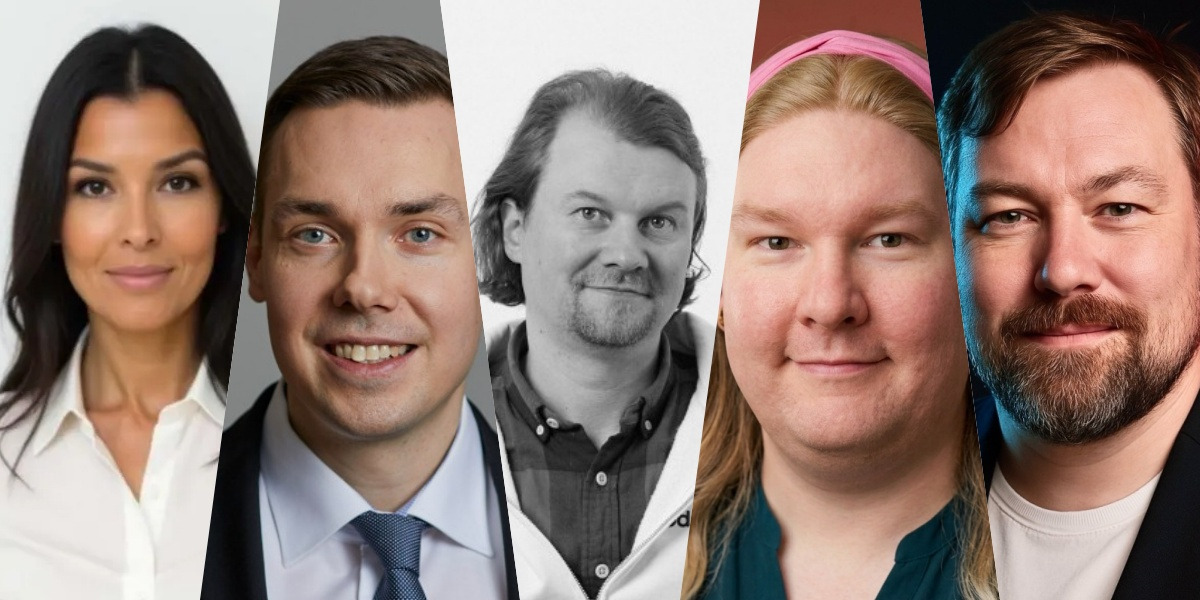
As the first part of our series on AI in the Nordic games industry, we spoke to five people close to that shift: two studio founders, an AI-native studio co-founder, a games lawyer and a business development manager working across studios, to see what AI adoption is looking like across the Nordic region.
Where AI is - and isn't - earning its keep
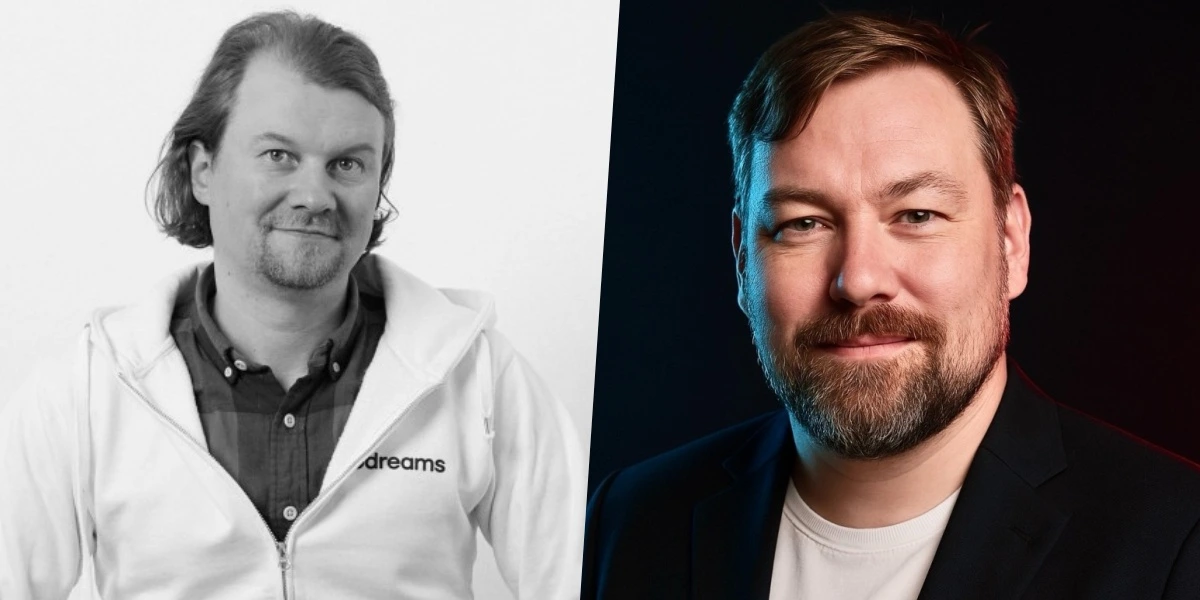
Mikael Gummerus, chairman and co-founder of Dodreams - the studio behind Drive Ahead!, which has passed 300 million organic downloads is candid about how far AI has actually reached inside his studio.

"Where AI has made the biggest difference for us at Dodreams is in data analysis and turning that data into actionable suggestions," Gummerus says.
"We have significantly reduced the amount of manual work involved, as well as the number of separate systems we need to use. The process now costs less, produces better-quality analysis and, importantly, gives us suggestions and perspectives that we simply did not have the manpower to uncover before.
"AI does not replace the final decision-making, but it helps us get from raw data to informed decisions much faster. In a relatively small team, that is a meaningful day-to-day advantage.
"We have not yet achieved the same kind of leap in Unity development or artwork. Those areas still involve much more hands-on work, and the gains from AI have so far been incremental rather than transformational. However, the tools are developing quickly, and we continue to experiment with where they can genuinely improve our workflows."
Roles collapsing into "vision holders"
Tatu Petersen-Jessen, a former senior art director at Rovio and art team manager at Remedy, co-founded Odd Latent as an explicitly AI-native studio. For him, the change isn't a new job title so much as how much ground one person can now cover.
"The closest concrete example in our studio is a role we call 'game specialist,' borrowing terminology used by some Turkish studios for their hybrid PM / design roles," Petersen-Jessen says.
"For us, a game specialist is practically a one-person game team, working across art, design and code. What is new is not necessarily the title itself, but how much ground one person can realistically cover with the help of smarter tools, agents and frameworks.
"As for what has disappeared, I would not say that any individual craft has disappeared entirely. In our company, what has largely disappeared is the narrowly defined role where someone works only within one discipline and then hands the work to the next specialist. Increasingly the crafts merge into one, and the goal becomes to understand the user and their experience holistically.
"This holistic understanding is also where most of the efficiency increase comes from. When one person can iterate on all aspects, and move faster, it results in better quality not just faster delivery.
“In many ways, I see this as a return to what game development used to be before complexity and competition drove up team sizes and specialisation.”Tatu Petersen-Jessen
"We have also had success giving our tools to people coming directly from university. They still arrive with one discipline as their strongest area, but the tools allow them to extend their impact well beyond it and take responsibility for a much larger part of making a game.
"In many ways, I see this as a return to what game development used to be before complexity and competition drove up team sizes and specialisation. When I talk about roles collapsing, I mean that previously separate roles are converging into combination roles.
"This can be scary or liberating depending on the person. It pushes people outside their comfort zones and towards broader responsibility. I think it suits people who joined the industry because they want to make games as a whole, while it may be less appealing to someone who wants to remain focused on a single craft."
Built for AI sceptics
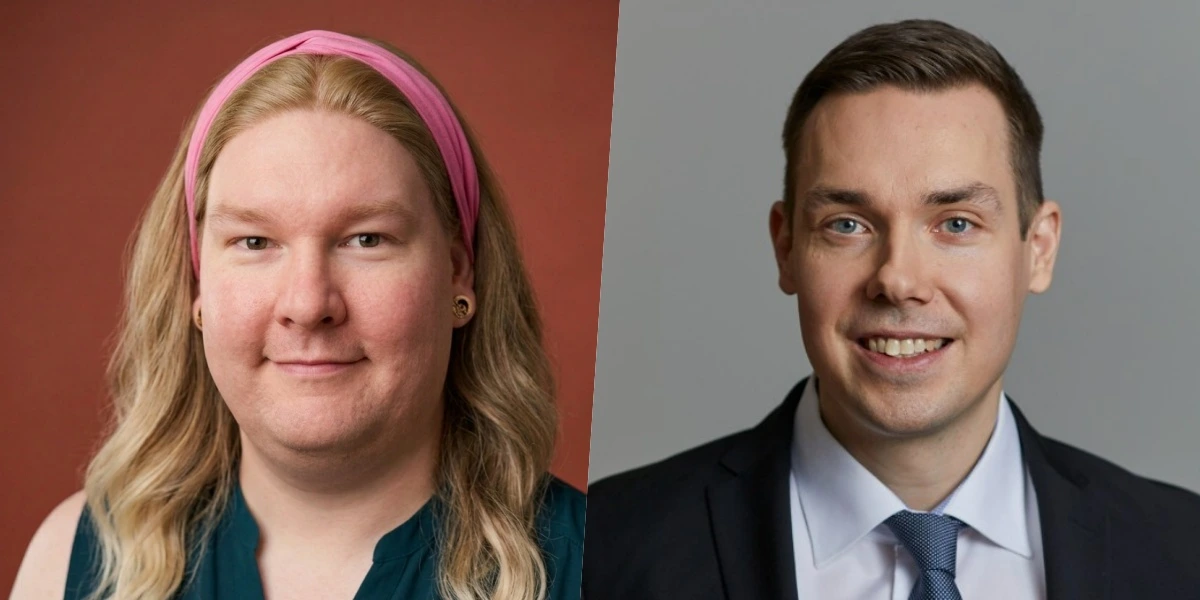
Olivia Tunkelo, COO and co-founder of Brimstone AI, describes her company as occupying an unusual spot in the AI conversation.
"Brimstone stands in a unique intersection of adoption and caution – an AI product that caters to people who are against AI," Tunkelo says. "This is also reflected in how we approach AI internally.
"We are leaning on AI assisted development and focus on testing features quickly and polishing them by hand. As an extremely quickly developing technology it also requires a lot of adaptability which means that we've designed our processes to not rely on specific software or methods. Instead we focus on the end result and what the standard of quality we expect from everything we release.
"I don't see fundamental changes coming to Brimstone as a company as a result of AI. That's largely due to the fundamental goal of focusing on human creativity. So while AI offers a lot of assistance, we don't see it changing the core focus of the company."
Where the real risk now sits
Tuomas Pelkonen, an attorney and senior associate at Nordia Law, says the question he's asked most hasn't changed - but everything around it has.
"Honestly, the most common question has not changed: a client describes how they are using AI and asks whether I see any risks," Pelkonen says. "What has changed is the level of detail in the description and the number of use cases in it. The AI Act is another recurring theme: what it now actually requires of a studio.
“With established brands the attachment to a favourite game and its characters runs deep and the thought that they might be AI-produced can be intolerable.”Tuomas Pelkonen
"But we also talk a great deal about commercial risk. In triple-A especially, players may simply not accept AI-generated content. With established brands the attachment to a favourite game and its characters runs deep and the thought that they might be AI-produced can be intolerable.
"Shadow AI is also discussed: developers using tools the studio has not adopted. If a team member reach for AI on their own initiative during development, under schedule pressure or otherwise, and never flag it, the company may find out only after launch. By then it may be both a commercial and a legal problem."

The view across the industry
Hind Toufga works across multiple studios as a business development manager, most recently advising Glimeria Studios AB and running her own consultancy, Julicia Studio, connecting Nordic and MENA gaming markets. From that vantage point, she sees adoption maturing fast.
"Based on my background as a business development manager and my work across different game studios, I get to see how these conversations and needs are developing across the industry," Toufga says. "What I'm seeing across the Nordic games industry is a shift from experimenting with AI to finding practical ways of integrating it into everyday production.
"Studios are increasingly looking at AI for areas such as coding support, automated testing and QA, localisation, data analysis, concept development and repetitive production tasks.
"For me, the most interesting part isn't AI replacing creative talent, but how it can allow smaller teams to work faster and give developers more time to focus on the parts of game development that genuinely require human creativity and judgement.
"The Nordics have always had a strong culture of technical innovation, but there is also healthy caution around ownership, ethics, data and protecting creative work. The studios that benefit most won't necessarily be those adopting the most AI, but those that understand where it genuinely improves their pipeline while keeping people, creative direction and player experience at the centre."
Continue the AI conversation at PGC Nordics, where the AI Gamechangers Summit is taking place - tickets are here.
For more insights on the Nordic games industry, read our free-to-download report, published in association with Xsolla. You can also check out our Top 30 Nordic Game Makers list here.
Companies





People


Events
